Neil Keating on Art, Liverpool, and the Power of Place
EJ sits down with Liverpool artist Neil Keating to learn more about his creative style, his influences and drawing inspiration from his world-renowned home city.
Interview by Ruby Smallman
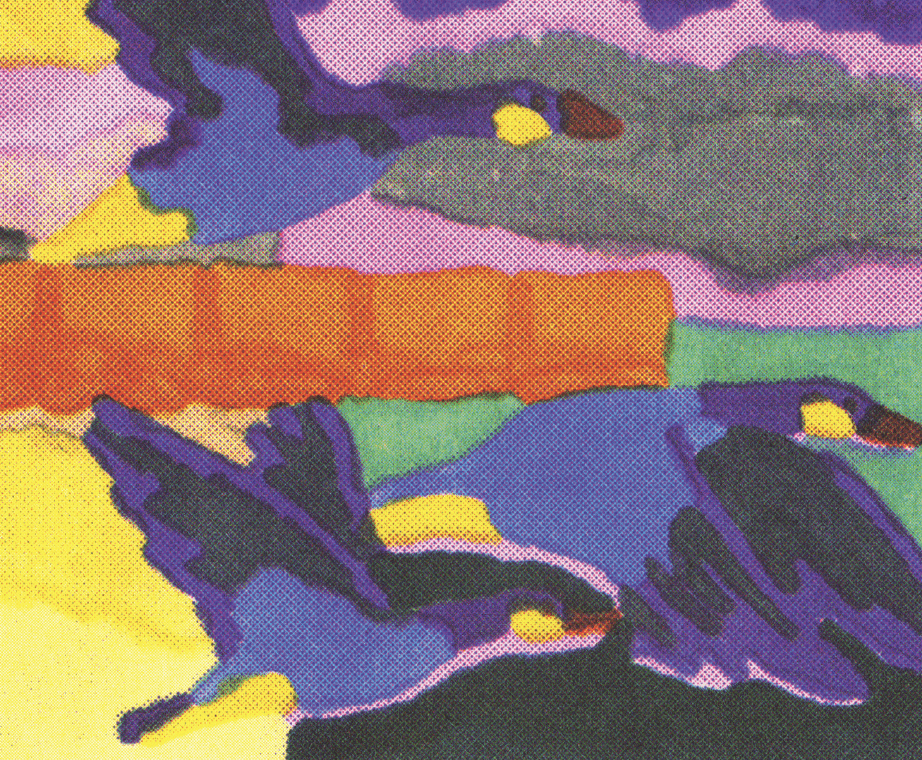
You can’t talk about Neil Keating without talking about Liverpool. The city isn’t just his backdrop; it’s his co-author. In a globalised art world, the illustrator’s work – sought after by brands like PlayStation and Dr. Martens – remains stubbornly and brilliantly local. His journey from a kid watching graffiti documentaries to a defining voice in the city’s visual landscape is a masterclass in how place forges an artist.
For Keating, street art wasn’t an obvious path. “I’d seen graffiti around Liverpool growing up, but never to that level of art form until college,” he admits. The spark came from the raw energy of documentaries like Steel Injection and Kids. “I’d never realised how cool street art could be,” he says, the memory clearly still vivid. “It could be done by any kid with a spray can on the streets and it could sit right alongside fine art in galleries. That’s what hooked me in.”
That hook set deep. A Bauhaus-style art foundation gave him the tools, but it was a first commission at 18 – a mural for the Royal Liverpool Hospital – that gave him the confidence. “There I was, 18 years old, painting large-scale public art for the first time. After that, I just kept going.” He cut his teeth on murals for music venues, a grind that solidified his hands-on approach. Even a later detour into corporate storyboarding, which he calls “too constrained to the computer,” only sharpened his hunger to get back to making his own mark. When redundancy came in 2015, it wasn’t a crisis; it was a release. “I was dying to get back to my own practice,” he says. “It felt like everything had come full circle.”
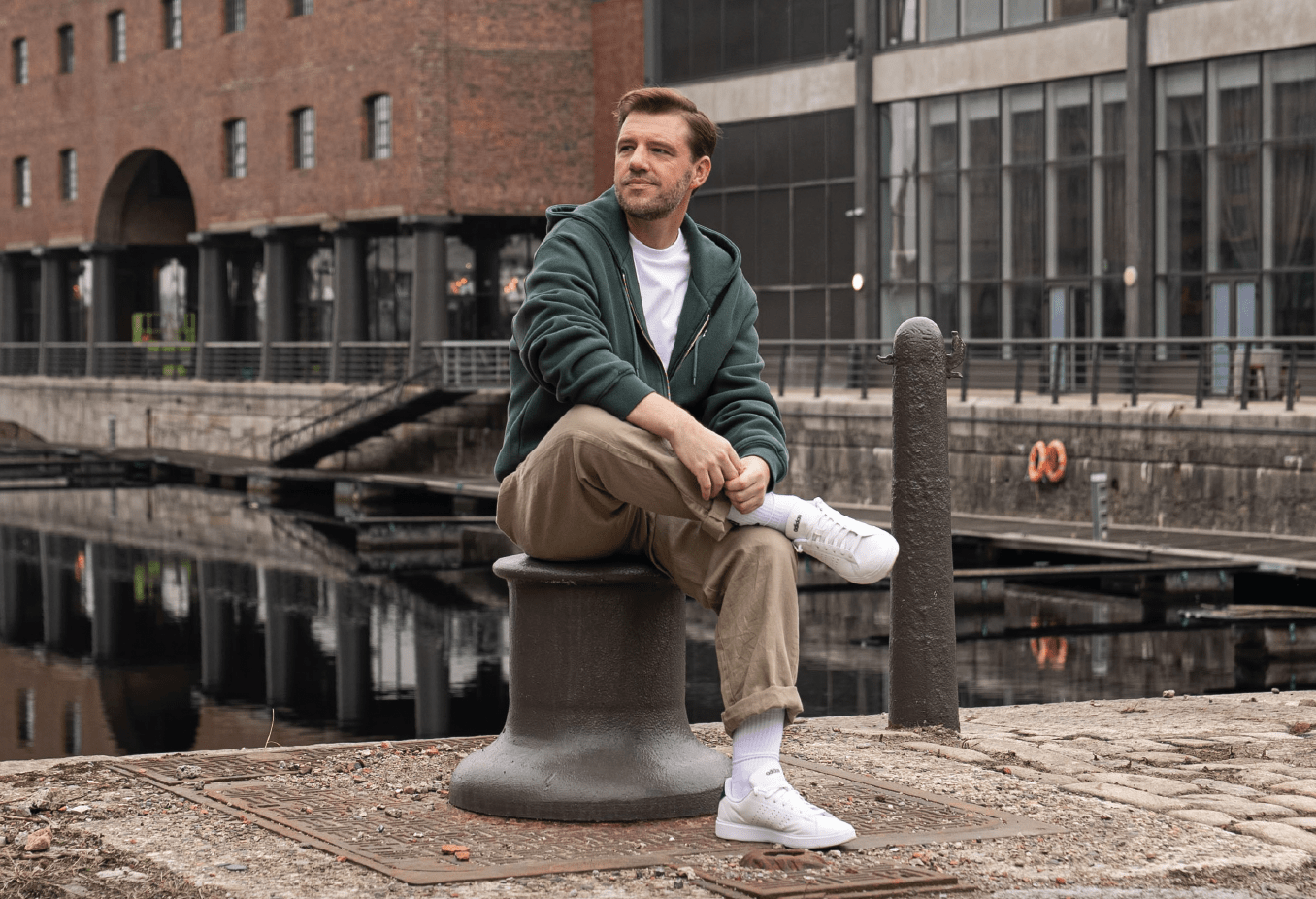
Liverpool’s influence is the throughline in his work. “It’s woven into the fabric of my work,” he states, matter-of-factly. “The people here have always supported each other, and that sense of community runs through everything I do.” You can see this in the spaces he gravitates towards – the once-derelict warehouses of the Baltic Triangle and now the historic Stanley Dock, where Neil met Essential Journal.
“Stanley Dock’s got a story, hasn’t it?” he says, his tone shifting to one of vested interest. The area’s regeneration, tied to his beloved Everton FC’s new stadium, is personal. “As a lifelong Evertonian, being involved in that story is a dream.” For him, it’s more than paint on brick; it’s about “breathing life into old spaces, giving them purpose again.” And when asked to name his proudest project, the answer is immediate. “Without a doubt, Everton.” He pauses, searching for the right words. “It’s rare that your personal world and your professional world line up perfectly, but when they do, it’s magic.”
Looking forward, Keating’s energy is infectious. He’s diving into the world of vinyl artwork, a passion project where “art, music and culture meet.” He’s growing his grassroots music event, Change Ya Tune, and is increasingly pulled toward mentoring. “I’m aiming to do more youth projects… that help young artists find their voice,” he notes, a sense of duty clear in his voice.
In an age of AI and endless digital replication, this focus on authenticity is his bedrock. “The tougher challenges now are around copyright, originality and integrity,” he concedes. But you get the sense he relishes the fight. “If your work comes from a real place, if it’s honest and says something true – people will connect with it. That’s something technology can’t ever replicate.”
It’s a belief he extends to Liverpool’s entire art scene. He wants to see more voices, more perspectives. But his final word on the subject is pure Keating: “It’s got to stay authentic… As long as we keep investing in our own people, the scene will keep evolving naturally – true to what this city’s all about.” And in that evolution, his own mark is indelible.