A centenary celebration across the Rolex line-up
A century ago, Rolex introduced the Oyster, the first waterproof wristwatch. It changed everything. At Watches & Wonders 2026, the brand has marked that anniversary not with a single showstopper but with a broad refresh of its Oyster Perpetual collection, alongside serious updates to the Datejust, Yacht-Master II, Day-Date and Cosmograph Daytona.
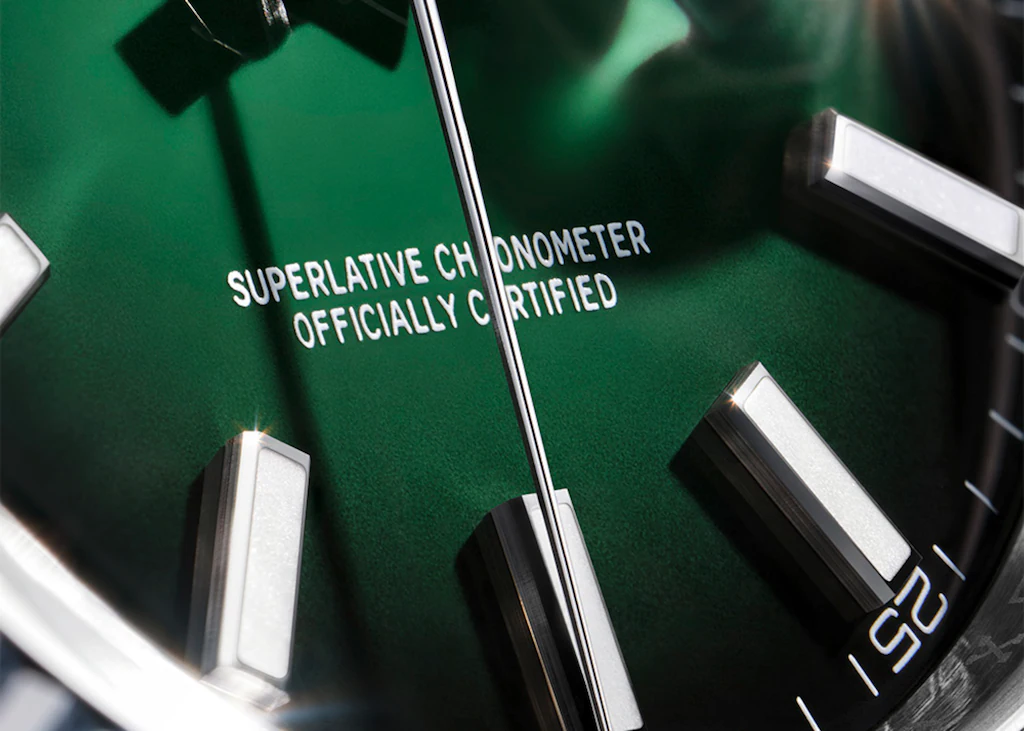
The common thread running through this year’s releases is the strengthened Superlative Chronometer certification, which launched in 2026 with three new testing criteria: resistance to magnetism, reliability and sustainability. These join the existing standards for precision, waterproofness, self-winding and power reserve. The precision requirement remains as tight as ever: each finished watch must be accurate to between –2 and +2 seconds per day.
Oyster Perpetual 41 | A centenary tribute in yellow Rolesor
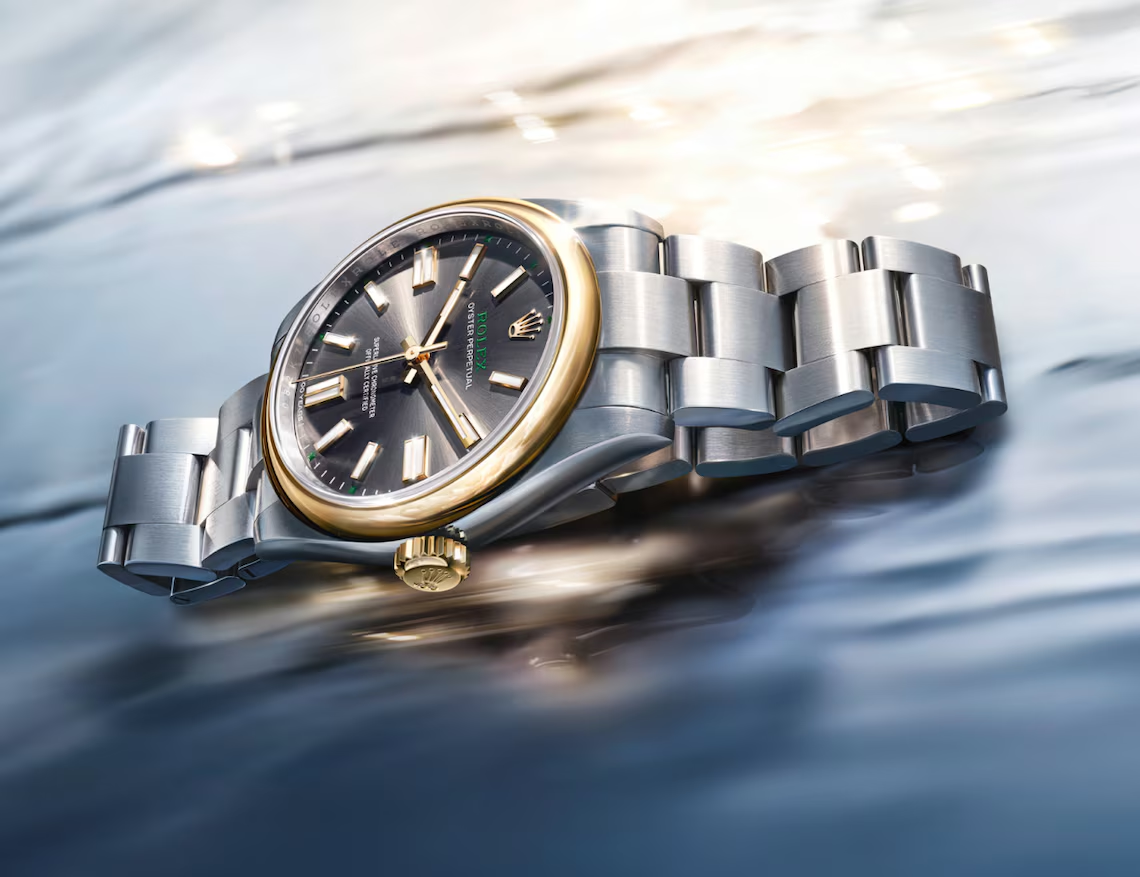
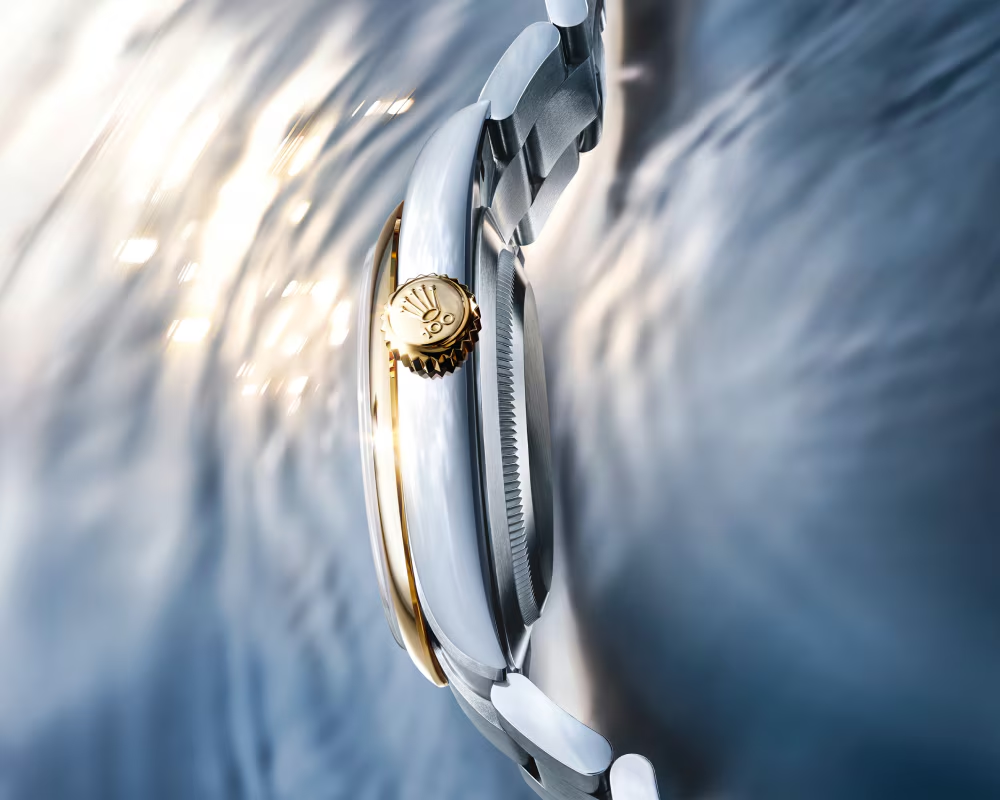
The Oyster Perpetual 41 in a yellow Rolesor version carries the anniversary on its dial. The watch pairs a bezel and winding crown in yellow gold with a bracelet made entirely of Oystersteel. That configuration is unusual for Rolex. Typically, on yellow Rolesor versions, the centre links of the bracelet are also in yellow gold. Here, the bracelet is all steel, which gives the watch a quieter balance while still offering the warmth of precious metal at the bezel and crown.
Look closer and the anniversary details appear. The winding crown features the number 100 in relief. On the slate dial, the inscription ‘100 years’ sits at 6 o’clock in place of the usual ‘Swiss Made’ marking. Each five-minute interval on the minute track is marked by a green square, and the name ‘Rolex’ is pad printed in the same green, the brand’s signature colour.
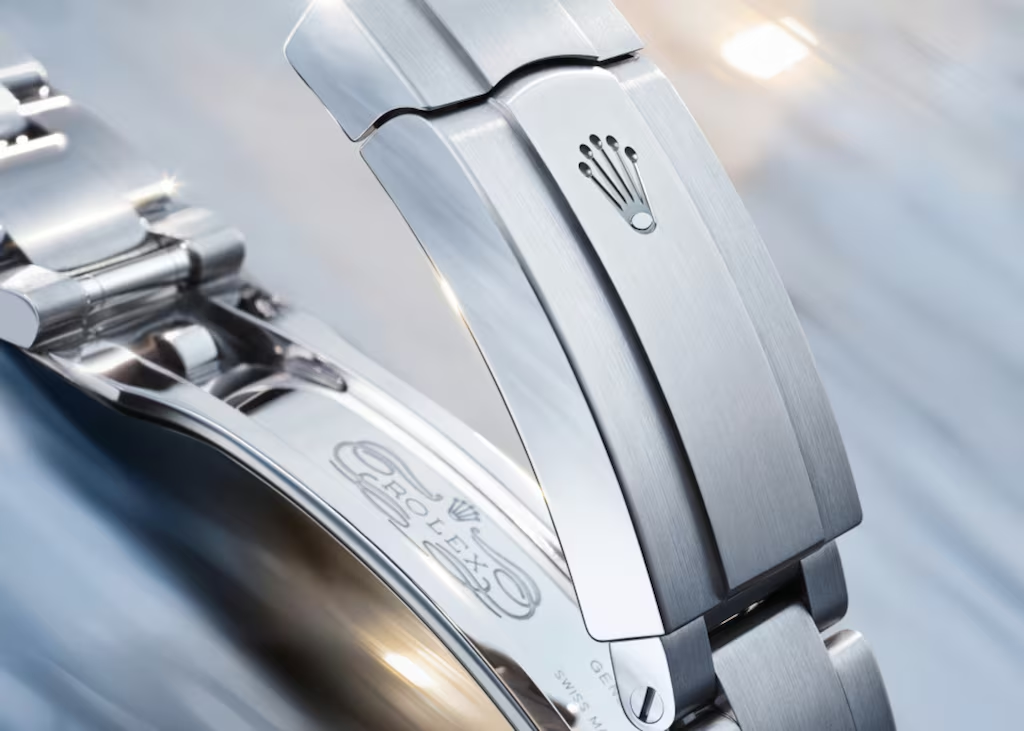
Inside, calibre 3230 runs with a power reserve of about 70 hours. It uses the patented Chronergy escapement and a blue Parachrom hairspring. The Oyster bracelet comes with an Oysterclasp and the Easylink comfort extension link, which lets the wearer adjust the length by roughly 5mm.
Oyster Perpetual 36 | The Jubilee motif returns
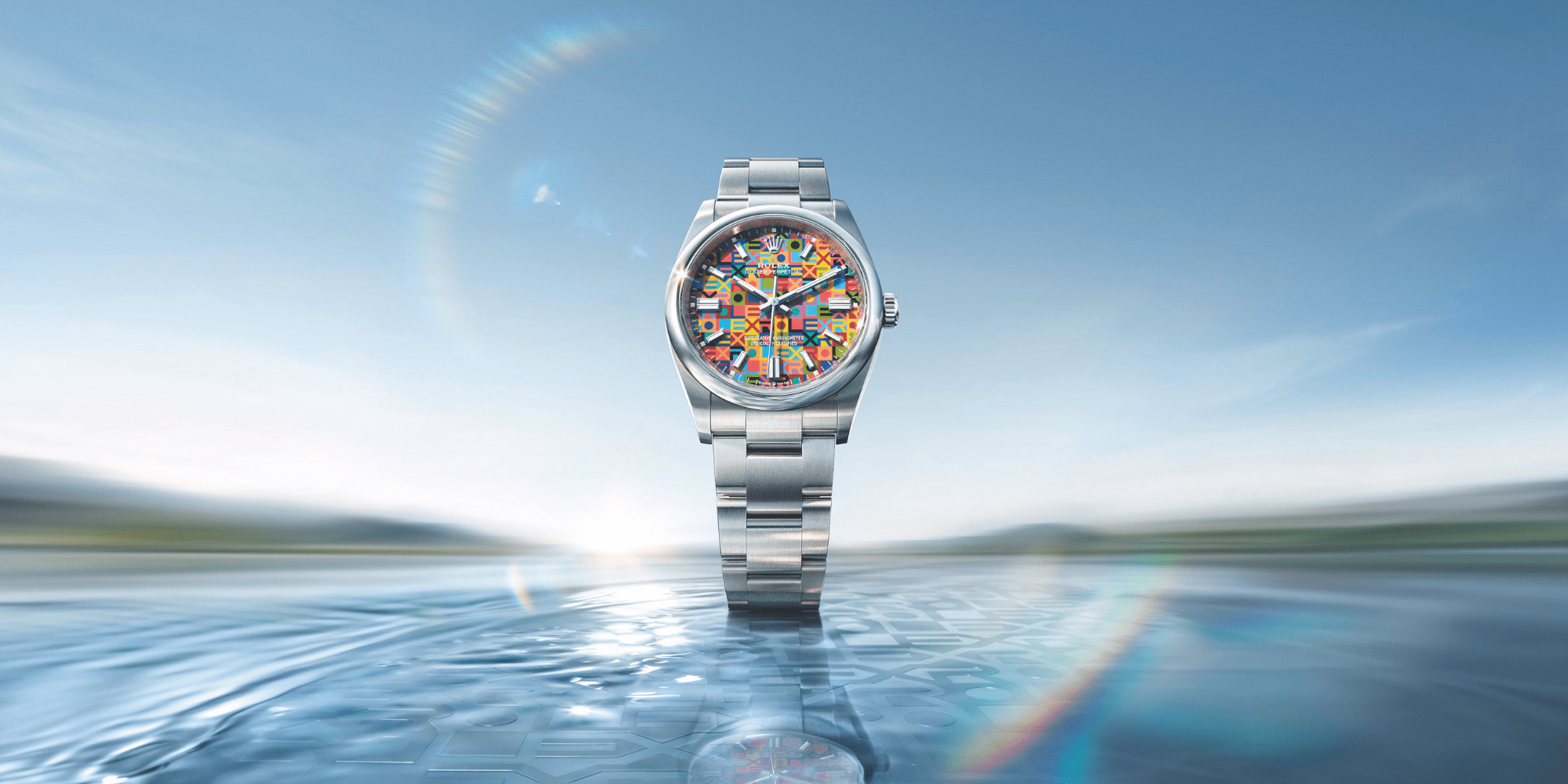
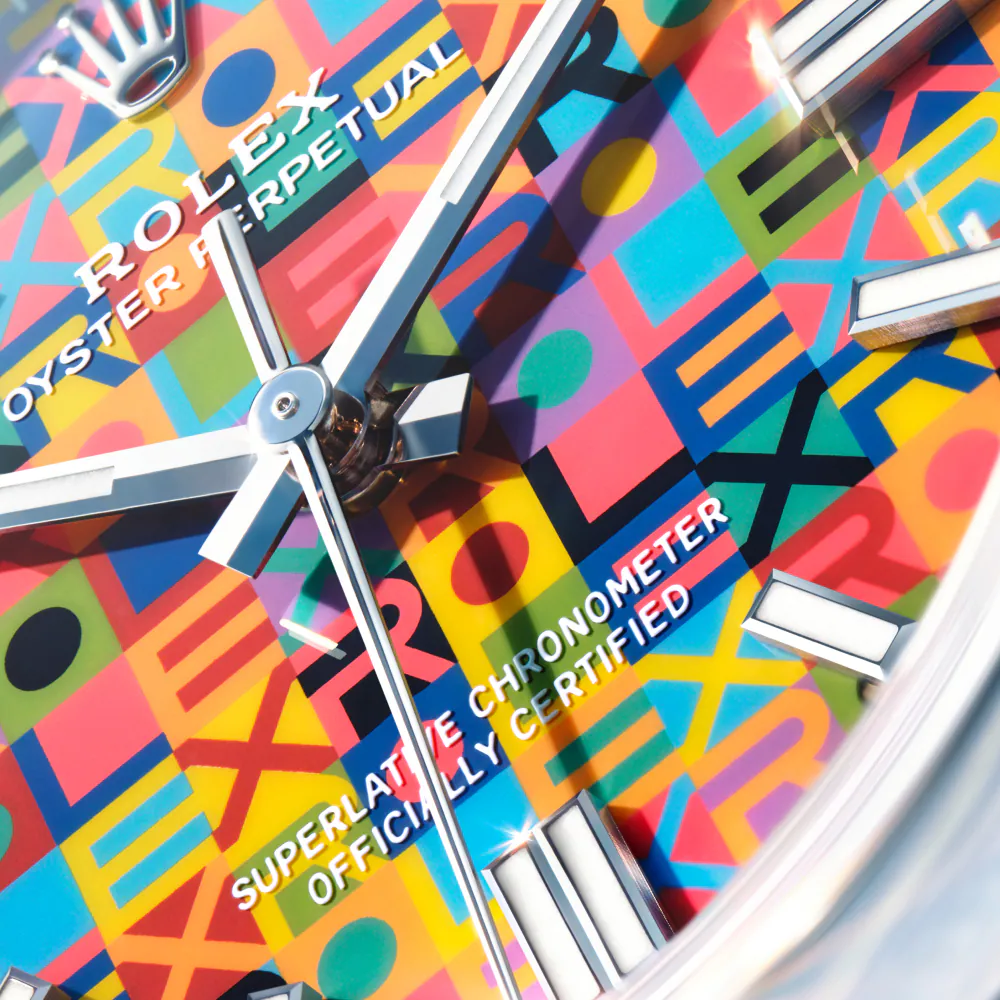
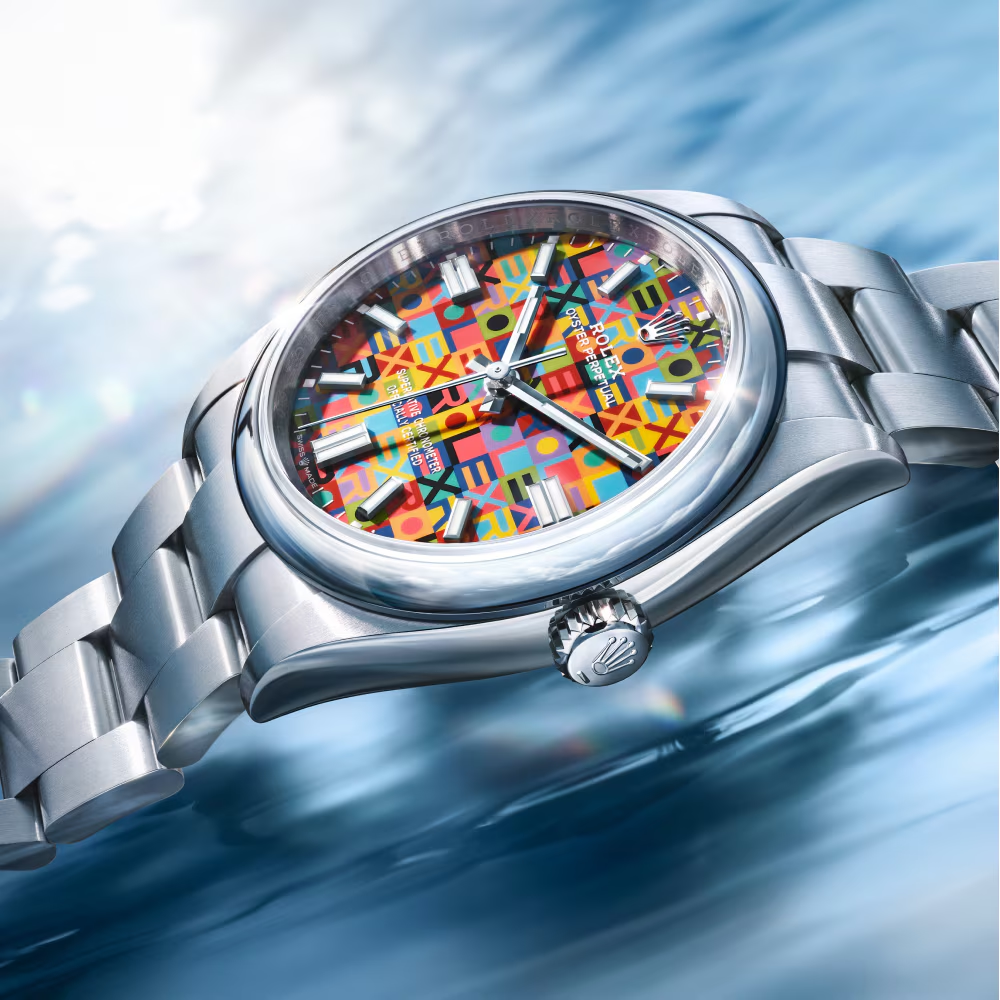
The Oyster Perpetual 36 takes a different route. Here, the dial is the main event. A multicoloured lacquer dial decorated with the Jubilee motif revisits a design first seen at the end of the 1970s. The pattern spells out the Rolex name in ten different colours, applied one after another rather than all at once. It is playful and sophisticated, a celebration of the brand’s dial-making craft rather than its anniversary.
The 36mm case is made from Oystersteel and houses the same calibre 3230 as its larger sibling. The Oyster bracelet and Easylink extension link come as standard. For those who prefer something smaller, the Oyster Perpetual 28 and 34 have also been updated, though with different movements and materials.

Oyster Perpetual 28 & 34 | Precious metal and natural stone
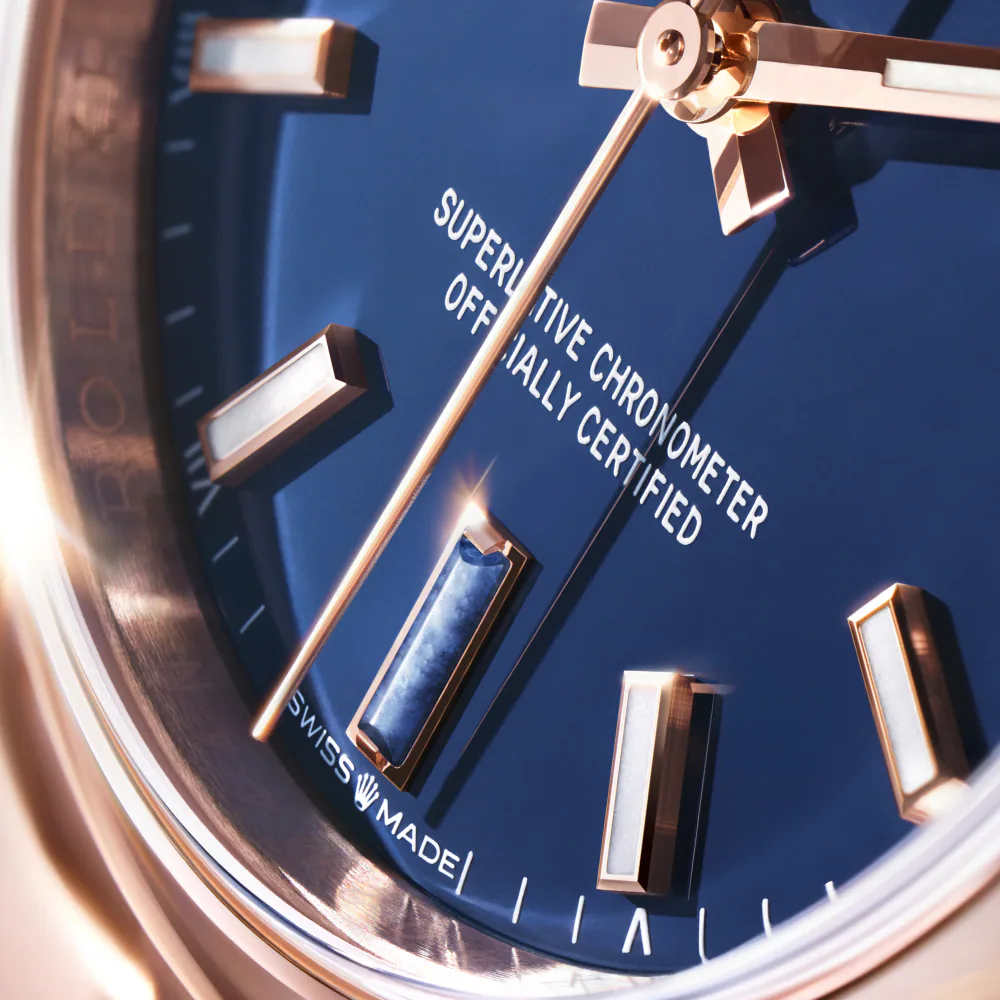
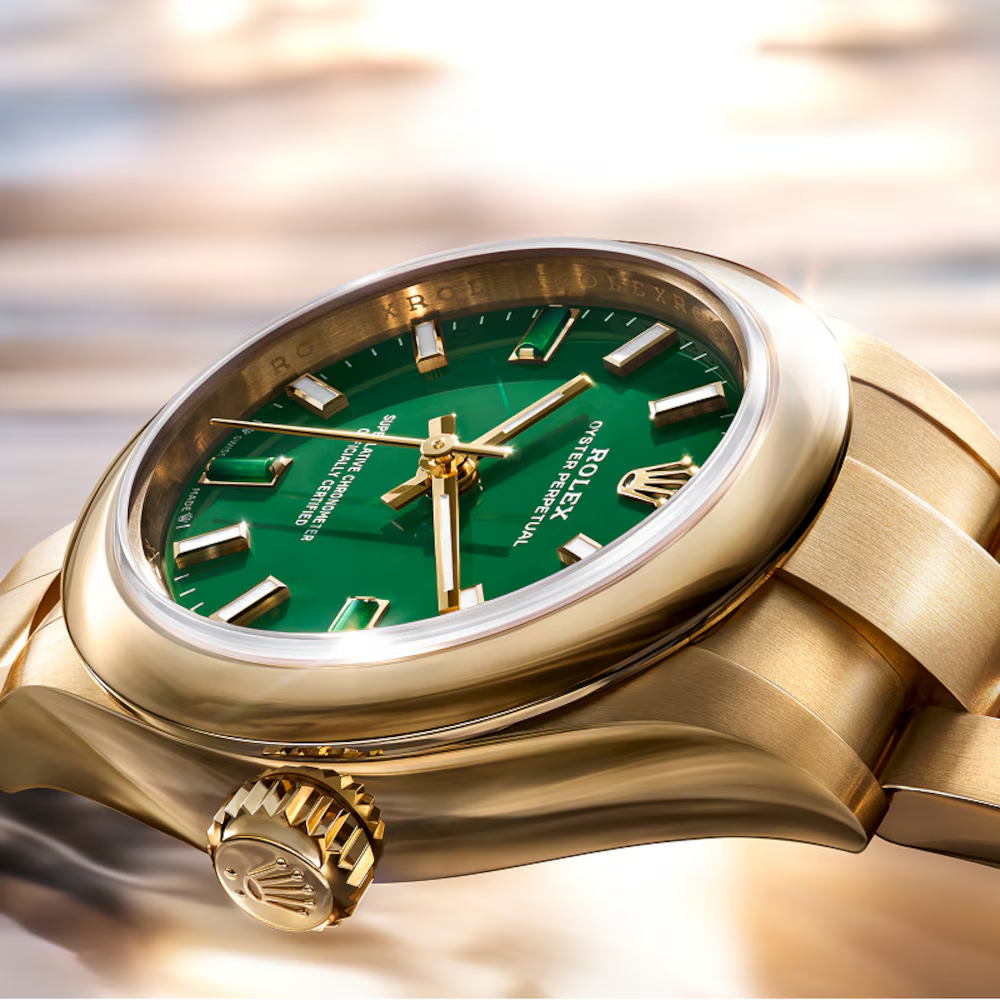
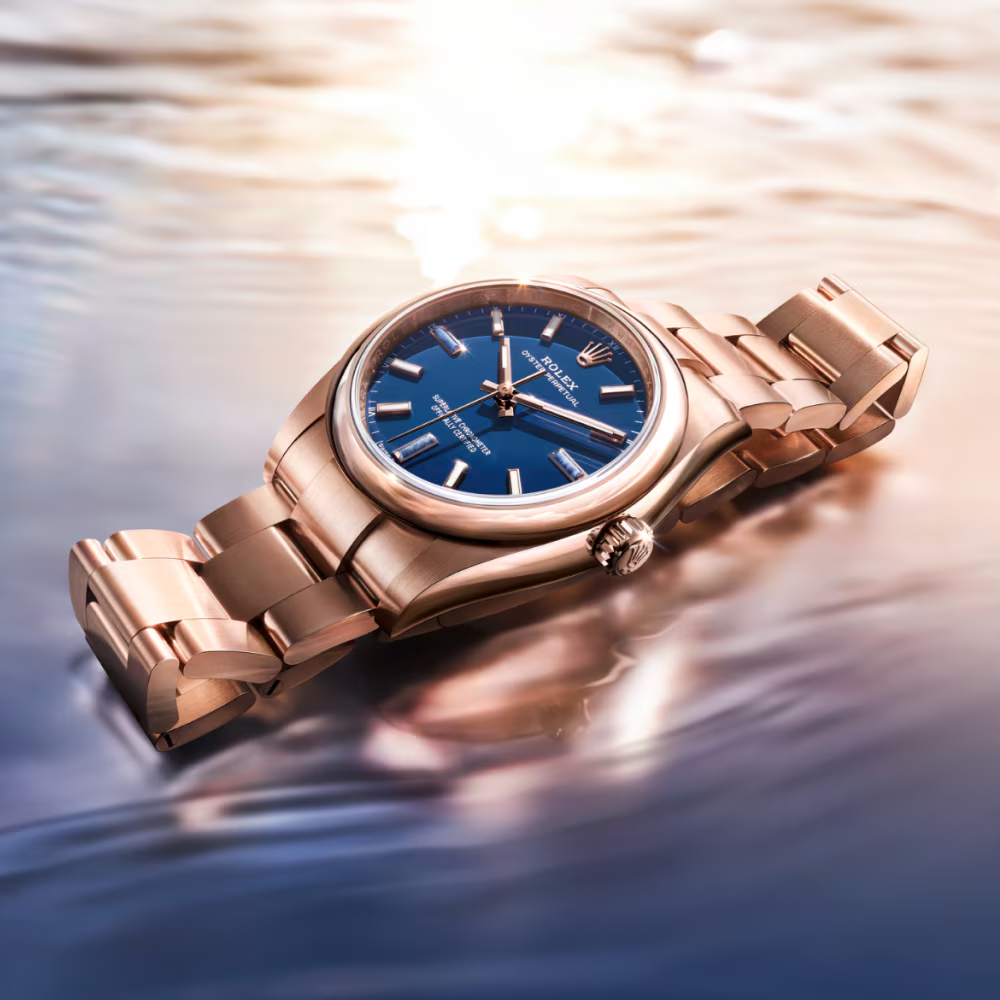
The smaller Oyster Perpetual models get a serious upgrade this year. The 28mm is made from 18 ct yellow gold with a green stone lacquer dial, while the 34mm comes in 18 ct Everose gold with a blue stone lacquer dial. For the first time, Rolex has used natural stone for hour markers. On the 28mm, the markers at 3, 6 and 9 o’clock are cut from heliotrope, a stone that shifts through various green hues. On the 34mm, dumortierite offers alternating patches of light and dark blue.
Both watches feature a satin finish on the case and bracelet. This is the first time Rolex has used that finish on precious metal timepieces. The domed bezel, polished to a shine, provides contrast. Inside, calibre 2232 offers a power reserve of around 55 hours and uses the Syloxi silicon hairspring, a Rolex-patented design.
Datejust 41 | A green lacquer ombré dial
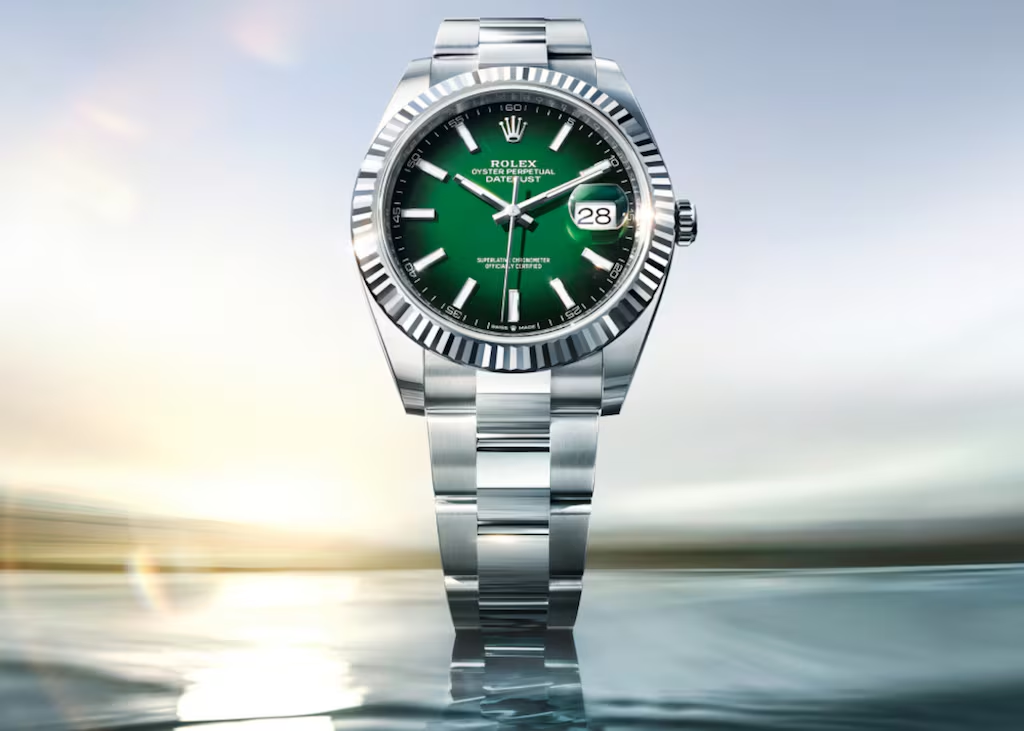
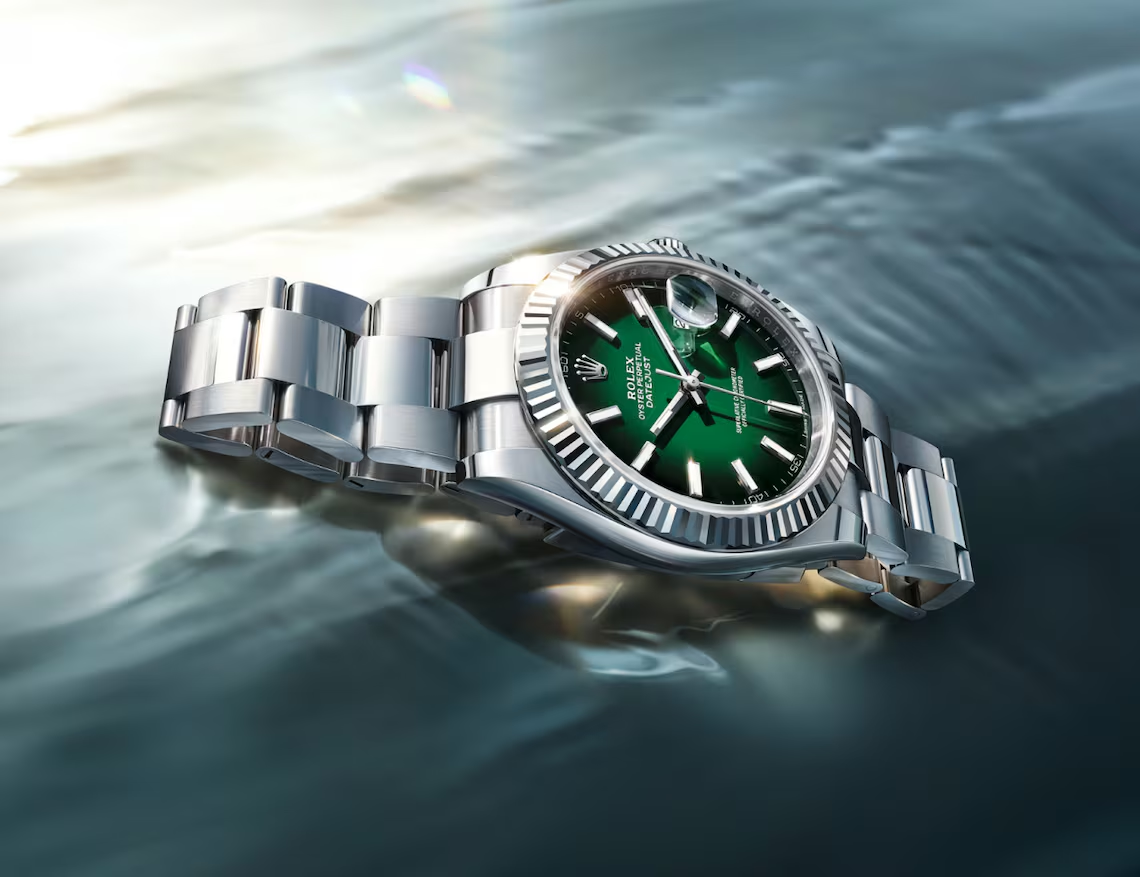
The Datejust 41 arrives in a white Rolesor version, combining Oystersteel and white gold, with a green lacquer ombré dial. This is the first ombré dial made entirely by lacquering since the pattern was brought back in 2019. Green lacquer goes onto the base plate first, then black lacquer is sprayed in concentric circles to create the gradient.
The fluted bezel and Oyster bracelet frame the dial, while the Cyclops lens at 3 o’clock magnifies the date. Inside, calibre 3235 drives the watch, with the same 70-hour power reserve and Chronergy escapement seen elsewhere in the collection.
Yacht-Master II | A complete redesign
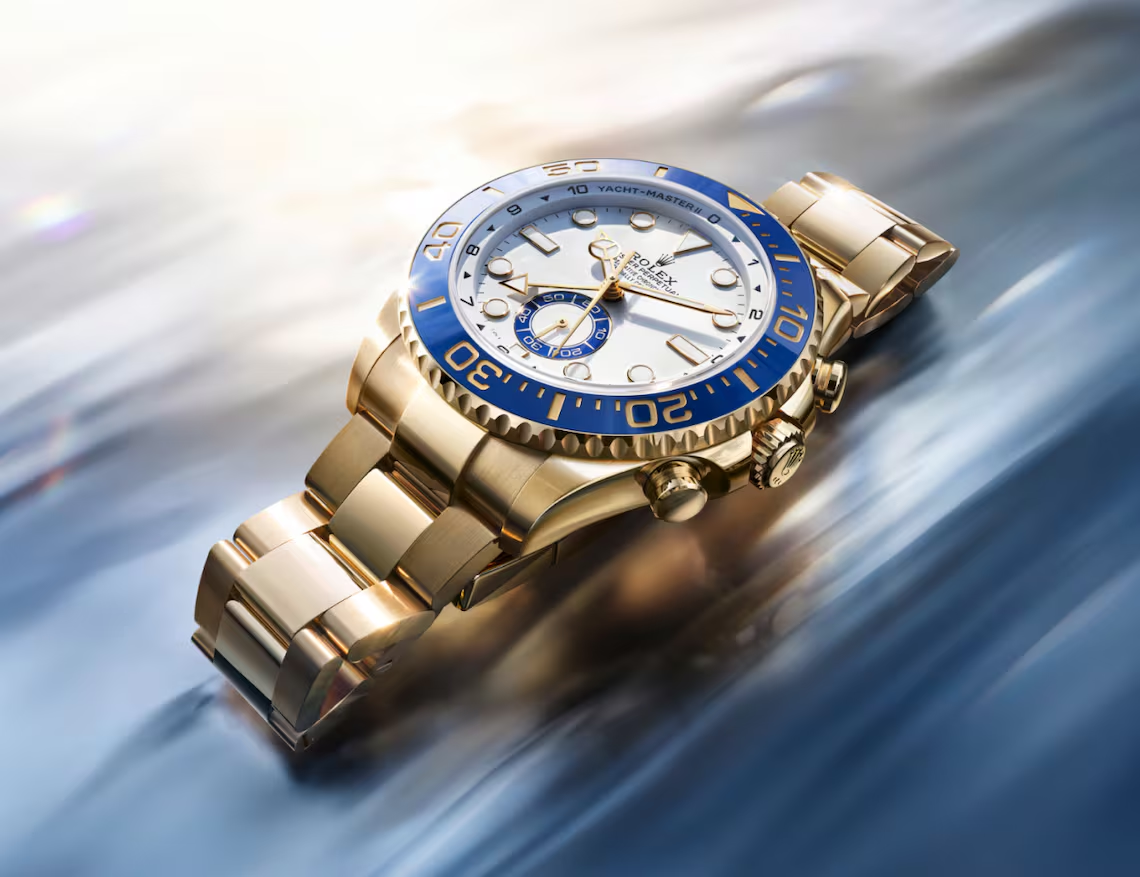
The Yacht-Master II has been overhauled from top to bottom. The regatta chronograph, first launched in 2007, now has a completely redesigned look and movement. The countdown function has been simplified for better legibility and easier use. The countdown scale now sits on a flange, and the function is set and operated using only the two side pushers, which are shaped like winches.
Available in Oystersteel or 18 ct yellow gold, the 44mm watch has a white matt lacquer dial to cut down on reflections. The bidirectional rotatable bezel comes with a 60-minute graduated Cerachrom insert in blue ceramic. One unusual detail: the countdown minute and seconds hands turn counterclockwise, a first for Rolex, which makes the countdown information easier to read.
Inside is the new calibre 4162, an evolution of the previous movement. It includes the Chronergy escapement, a cut-out oscillating weight and bridges decorated with Rolex Côtes de Genève. Power reserve is about 72 hours.


Day-Date 40 | A new gold alloy
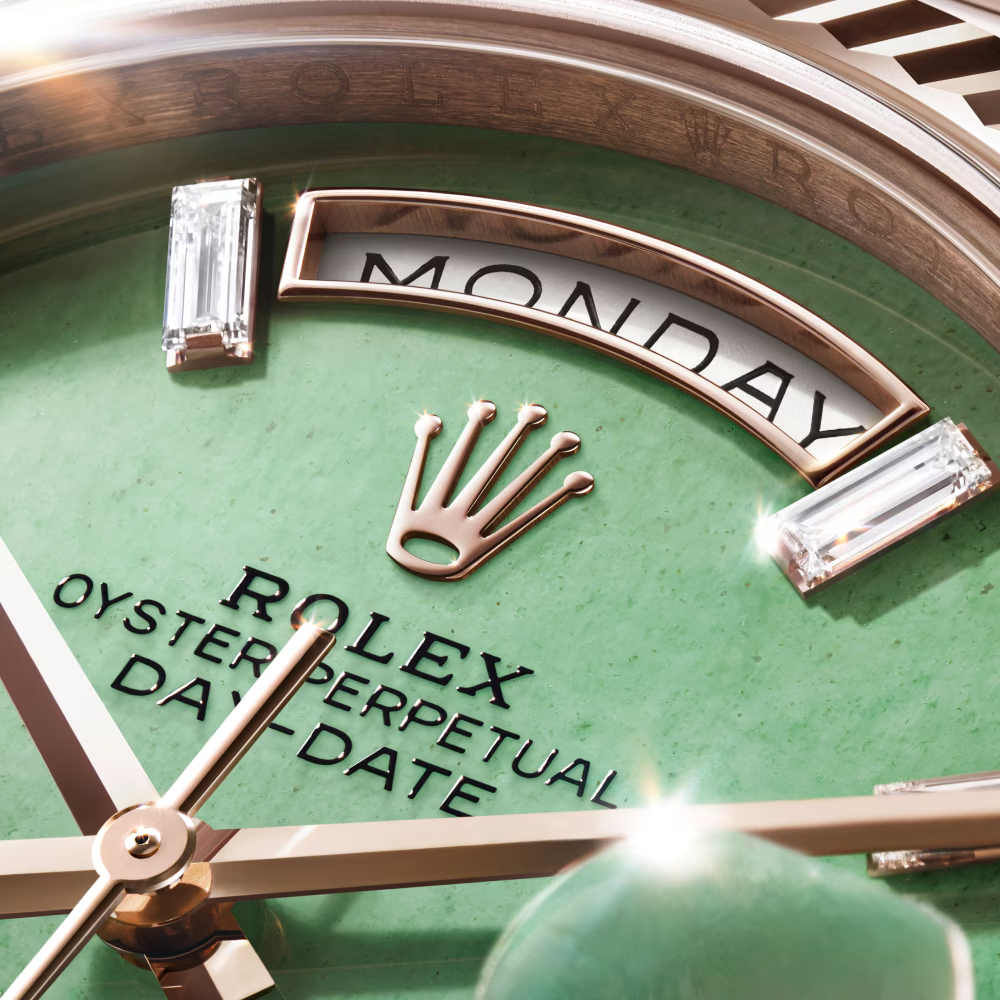
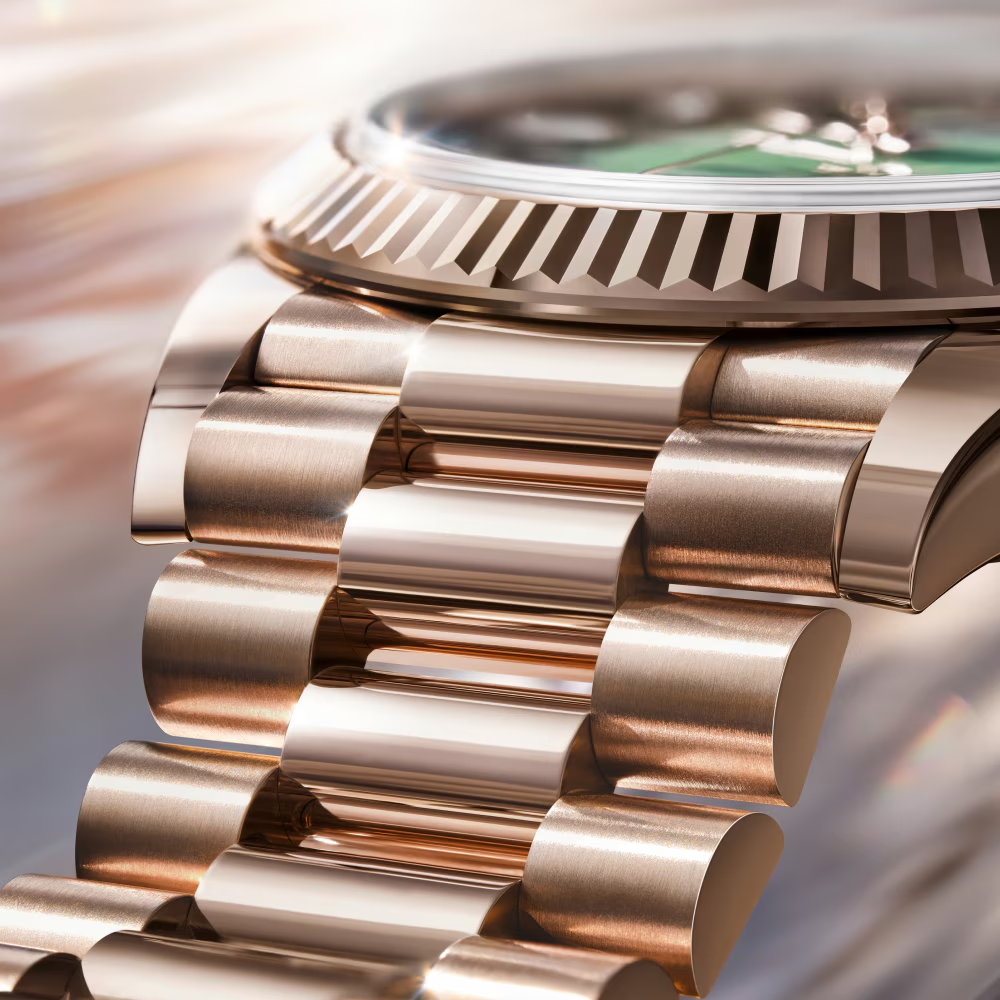
Rolex has introduced a brand new 18 ct gold alloy: Jubilee Gold. The metal, which has tones of soft yellow, warm grey and gentle pink, debuts on an exclusive version of the Day-Date 40. The dial is cut from bright green aventurine, a natural stone from the quartz family, and features ten baguette-cut diamonds around the hour circle. The fluted bezel and President bracelet with concealed Crownclasp complete the look.
Inside, calibre 3255 provides the day, date, hours, minutes and seconds, with a 70-hour power reserve.

Cosmograph Daytona | Enamel and ceramic innovation
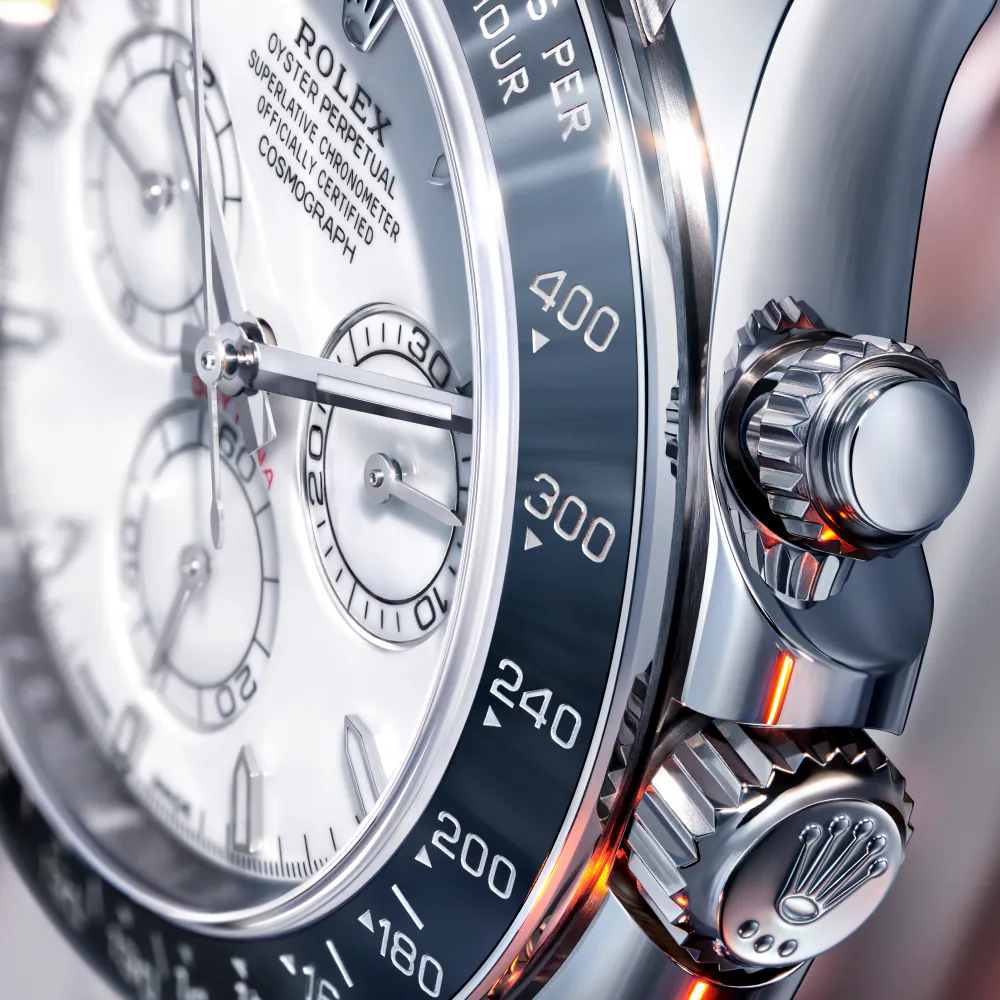
The Cosmograph Daytona appears in a Rolesium version, combining Oystersteel and platinum for the first time. The anthracite Cerachrom bezel, a new shade, is made from a specific ceramic composed of zirconia enriched with tungsten carbide. The tachymetric scale has been redesigned, with numerals displayed horizontally just like the original 1963 model.
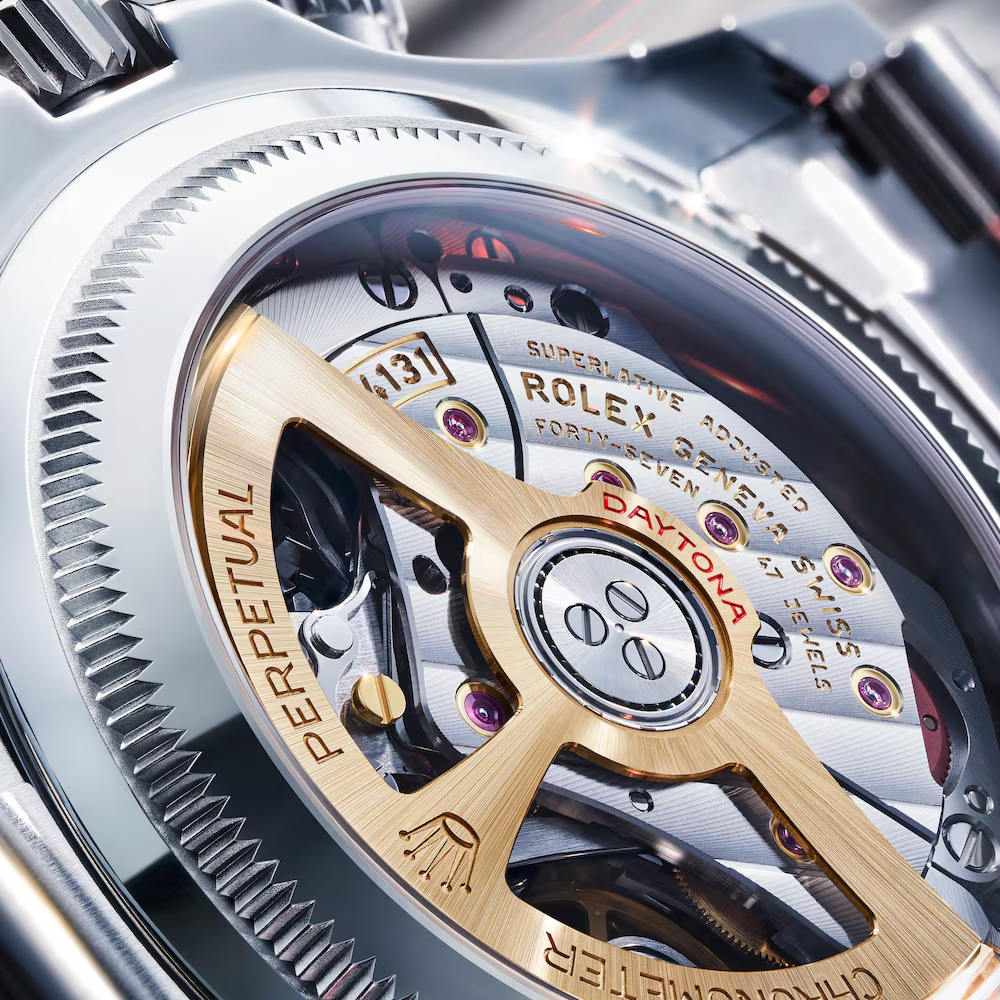
The white dial is created using the traditional grand feu enamelling technique, fired in a kiln heated to over 800°C. Unusually, the enamel is applied onto ceramic plates rather than a metal base. The case back is transparent, giving a view of calibre 4131, which has a cut-out oscillating weight in yellow gold and bridges decorated with Rolex Côtes de Genève. Power reserve stands at about 72 hours.

Taken together, this is Rolex doing what it has always done: refining its core range, nodding to its history and introducing just enough new thinking to keep people interested. The Oyster turns 100, but the Crown shows no sign of slowing down.